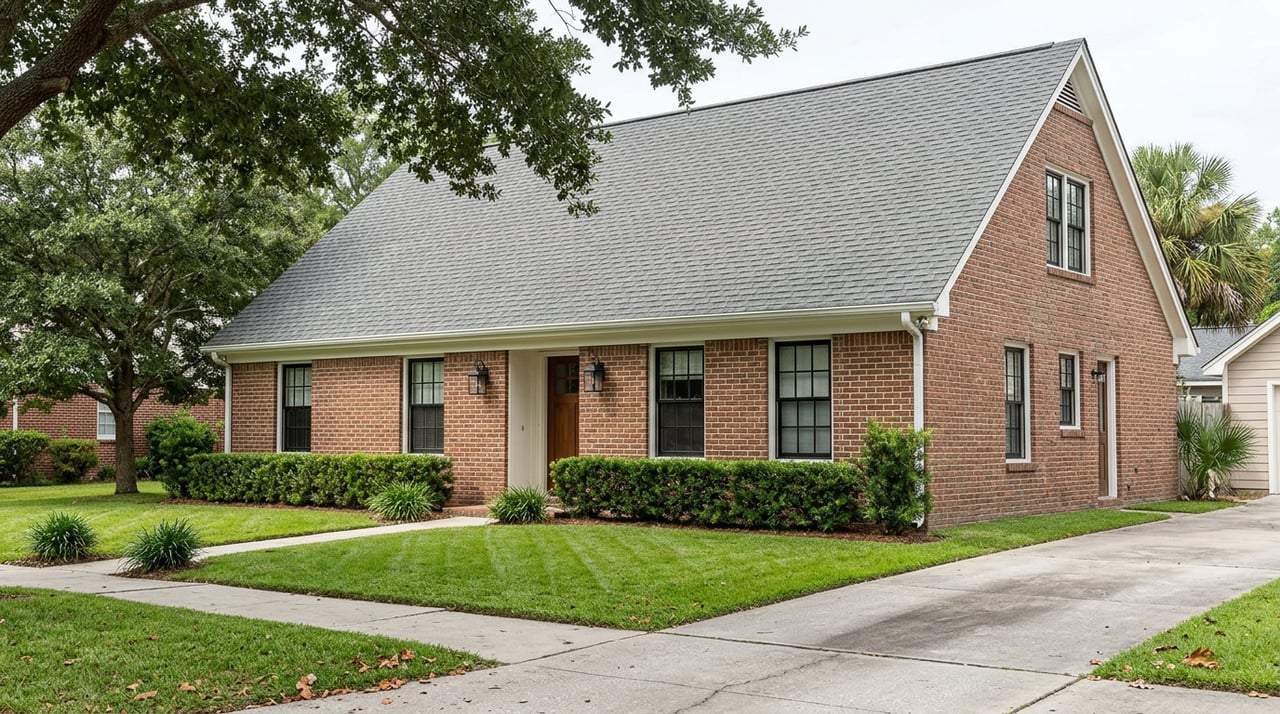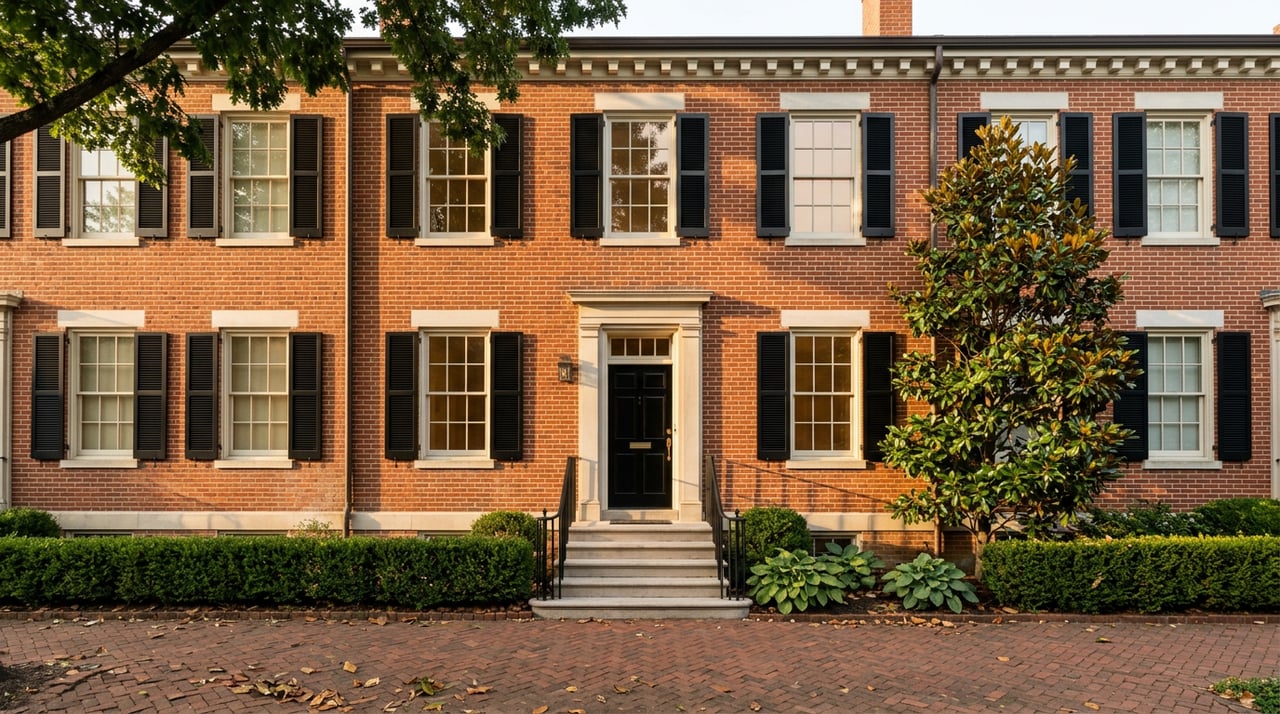
A buyer walks two open houses on the same Saturday. Both are listed at $350,000. Both have three bedrooms, a two-car garage, and a finished basement. By every number on the listing sheet, they are the same house twice.
They are not the same house. One of them will cost several hundred dollars more a year to own, and the difference has nothing to do with the roof, the lot, or the school rating. It comes down to which taxing districts happen to overlap that particular address, and whether the property sits inside a boundary that has shaped how Lexington grows since 1958.
Your tax bill is not one number set by one office
In Fayette County, the property tax line on a closing statement is really a stack of separate rates, each set by a different body, each doing its own math. The Commonwealth of Kentucky sets one rate. Lexington-Fayette Urban County Government sets several more, covering the city's General Fund and its Urban Services Fund. Fayette County Public Schools sets its own rate independent of the city. Lextran, the county library system, the Health Department, and the Soil and Water Conservation District each add a smaller slice on top of that.
The school district's piece is the one that matters most. In fiscal year 2026, Fayette County Public Schools claimed 63.14 percent of all ad valorem tax revenue collected in the county, according to presentation materials Lexington's Urban County Council reviewed ahead of its August 2026 rate vote. That single fact does more to explain differences between two Lexington tax bills than anything about square footage or lot size. Two homes at the same price, in two different school attendance zones with two different levy histories, are not competing on the same tax math to begin with.
The Urban Services Fund only bills you for what you actually get
Layered on top of the school levy is a piece unique to how Lexington runs its city services. Beyond police, fire, sewers, and roads, which every property in the county receives, some addresses also get trash collection, street lights, and street sweeping. Those extra services are paid for through a dedicated line called the Urban Services Fund, and the city bills for it separately from the General Fund.
This is where identical price tags start producing different bills. A property that receives those services pays into that fund. A property that doesn't, doesn't. The dollar difference is not abstract. Following an August 2025 council vote that kept rates flat for fiscal year 2026, a $250,000 Lexington home paid $190 toward the General Fund and $437.50 toward the Urban Services Fund, assuming it received street cleaning, trash collection, and street lighting. A year later, in presentation materials for the fiscal year 2027 budget, a $270,000 home's Urban Services Fund bill alone came out to $467.10 under the rate option the Mayor's administration recommended.
| Fiscal Year | Example Home Value | What Changed | Urban Services Fund Bill |
|---|---|---|---|
| FY2026 (rate held flat, Aug 2025 vote) | $250,000 | No rate increase | $437.50 |
| FY2027 (proposed, Aug 2026 presentation) | $270,000 | Rate set for 4% revenue growth | $467.10 |
Notice what didn't move: the rate itself barely changed year to year. What moved was the value underneath it, and the fund's revenue climbed anyway. That is the pattern buyers need to internalize. A stable millage rate does not mean a stable bill. Rising assessments do the quiet work.
Why a boundary drawn in 1958 still shows up on your closing statement
Lexington was the first city in the country to draw an Urban Services Boundary, back in 1958, and the line still splits the county today. Roughly 30 percent of Fayette County's land, about 85 of its 285 square miles, sits inside that boundary. The other 70 percent sits outside it. Despite that lopsided split, about 97 percent of the county's population lives inside the boundary, because that's where development, and the services that come with it, have been allowed to concentrate.
The boundary was last expanded in 1996, adding roughly 8 square miles across three areas, including the Hamburg area that's now home to some of Lexington's newer subdivisions and shopping. Council voted again in 2023 to expand it further in five locations, a process that runs through a formal Urban Growth Master Plan rather than an immediate rezoning, so newly designated expansion land doesn't turn into finished, service-connected neighborhoods overnight.
For a buyer, the practical takeaway is this: a property's relationship to that boundary predicts more than whether the street gets swept. It predicts whether the Urban Services Fund tax applies at all, and it shapes how established the surrounding infrastructure and tax history actually are. A century-old home in Gratz Park or Ashland Park sits deep inside a boundary that's been settled for decades. A newer build near one of the more recent expansion areas may be inside the boundary but still catching up to it in terms of service history and assessed value trends.
What the spread actually looks like, ZIP code by ZIP code
None of this stays theoretical once you look at real addresses. A 2026 analysis of Fayette County tax records found that homeowners in the 40507 ZIP code carried a median effective tax rate of 1.24 percent, while those in 40510 paid 1.07 percent, a 0.17 percentage point spread within the same city. The same analysis found the annual bill itself ranging from roughly $1,460 in ZIP code 40508 to nearly $4,946 in ZIP code 40502, a difference the analysis attributed largely to differing school district levies and local assessment districts rather than to home size or condition.
That is not a rounding error. On a monthly mortgage payment basis, that spread is real money, and it's invisible on a listing sheet that only shows list price and square footage.
What to actually ask before you write an offer
If you're comparing neighborhoods like Chevy Chase, Gratz Park, and Ashland Park against newer areas like Hamburg, Beaumont Centre, or Masterson Station, the list price comparison is only the opening question. The follow-up questions are the ones that actually determine your monthly number:
- Which FCPS attendance zone and levy applies to this specific address, not just the general Lexington area
- Whether the property sits inside the Urban Services Boundary, and whether it currently receives trash, street light, and street sweeping service
- What the current combined rate looks like across the General Fund, Urban Services Fund, school levy, and smaller special districts for that address
- Whether the home's most recent PVA assessment reflects a value close to the purchase price, since a large gap can mean a bill that resets higher after the sale closes
The Fayette County PVA's own tax district calculator lets you plug in an assessed value and district to see the actual math, rather than relying on a citywide average that may not reflect your specific address.
One more wrinkle worth knowing before closing week: Kentucky values property as of January 1st but bills arrive in the fall, and the bill that lands in October actually covers the year that's ending, not the year ahead. Buyers coming from states that bill in advance sometimes assume a proration works the same way here. It doesn't, and it's worth confirming with your closing attorney exactly which year's bill is being prorated at the table.
The number that should travel with the address, not the price
The thesis here is simple and it holds up against every figure in this piece: in Lexington, the list price tells you almost nothing about the tax line that follows the house. Two properties at $350,000 can land in different school levy zones, different sides of a boundary drawn in 1958, and different ZIP-level assessment patterns, and the gap between their actual annual bills can run into the thousands.
Before you fall for a number on a listing sheet, pull the real one. Our team at Concierge Real Estate Co. can walk a specific Lexington address through its actual taxing districts, not a citywide average, so you know the real monthly number before you write an offer. And if you're weighing a Lexington purchase against selling a home of your own first, start with a free look at where your current property stands. Get Your Instant Home Valuation and let's talk through both sides of the move.